
Opera and Theater
Signature Concert #3
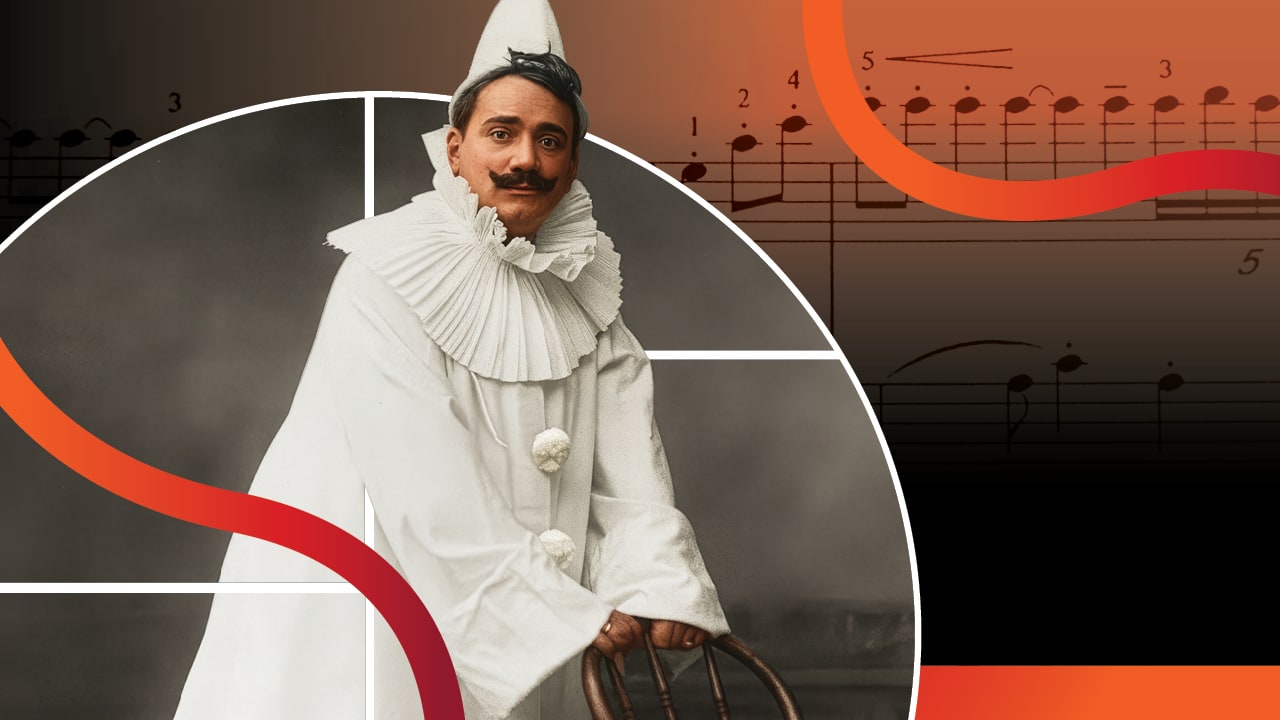
Step into the world of opera with Leoncavallo’s Pagliacci, one of the most exciting examples of verismo, or “real-life” opera. The story follows love, jealousy, and betrayal among traveling performers, full of soaring arias and intense drama that still grabs audiences today.
“Maestro’s Musings” pre-concert talk starts at 6:30pm.
Wes Kenney, Music Director
Brian Luedloff, Stage Director
James Flora, Canio
MacKenzie Laun, Nedda
Joel Balzun, Tonio
Cody Laun, Peppe
Andrew Garland, Silvio
UNC Opera Chorus
Worried about what to wear? Where to park? When to clap?
Visit our Newcomer’s Guide.
Program Notes
Repertoire
Leoncavallo – Pagliacci
Pagliacci—Ruggero Leoncavallo
In the latter nineteenth century there arose a distinct literary movement to explore the human passions of everyday humanity, even those lowest in social station, in all the realistic passions, irrationalities, and sordid details—and it could be graphic. In Italy, the movement—and later operatic style—was deemed verismo, literally, “realism.” In 1890, what is considered the first verismo opera, Cavalleria rusticana, composed by Pietro Mascagni, was premièred in Rome. Its sexually charged tale of betrayal and violence—confrontation on the church steps on Easter morning and ending with a brutal murder was irresistible. That, and Mascagni’s beautiful, passionate music made for an instant success.
With Mascagni’s operatic triumph before him, the little-known Leoncavallo quickly responded two years later with his own work, Pagliacci, soon to be paired forevermore with Mascagni’s opera as “Cav/Pag.” Leoncavallo was a well-educated, gifted musician, who was early on influenced by magnificent grand operas and the works of Wagner. Not at all what you would expect from a composer whose reputation now rests on a modest little drama. With the roaring success of Cavalleria rusticana before him, he quickly saw the possibilities, and jumped right in. The successful première took place in Milan in May of 1882, and shortly thereafter the work found its way to London and New York.
The story itself has a checkered history, with several claimants to its origin—with lawsuits, claims and counter claims. But the essence is that of a “play within a play,” an idea that was not unique in the history of drama. The small group of traveling actors in Pagliacci are Commedia dell’arte players. The genre is an old mainstay of the history of drama, featuring the masked archetypes so familiar: Harlequin, Pierrot, Pulcinella, Pantalone, Scaramouche, and others. Punch and Judy puppets are a related genre.
In our opera the little troupe consists of Canio, the leader, playing Pagliaccio the clown and Nedda, his wife, playing Colombina. Rounding out the small cast is Beppe, who plays Arlecchino and Tonio, playing Taddeo, a rather pitiful servant. Those are the actors in the play, wherein Colombina is in love with Arlecchino. But, in real life it’s a bit more complicated: The feckless Tonio aspires to Nedda’s love, but is quashed in the desire whereas Nedda (Colombina) actually is in love with Silvio, not a player. Canio, the husband, is a tough, suspicious, fiery guy who will not be cuckolded. Everyone is reckless, and tragedy is predestined.
–Wm. E. Runyan
© 2026 William E. Runyan
When
Saturday, February 6, 2027 @ 7:30pm
Where
The Lincoln Center
417 W. Magnolia St.
Fort Collins, CO 80521
Tickets
Adult tickets: $33-87
Student/Child tickets: $10
Streaming Price: $29
Student/Child tickets: $10
Streaming Price: $29
Tickets for this event are purchased through the Lincoln Center. Prices shown include Lincoln Center fees.